

The Briefing
- Finland rejected 1,400 of 1,600 processed visas.
- Most rejected applications originated from Thailand.
- Denials stem from severe worker exploitation risks.
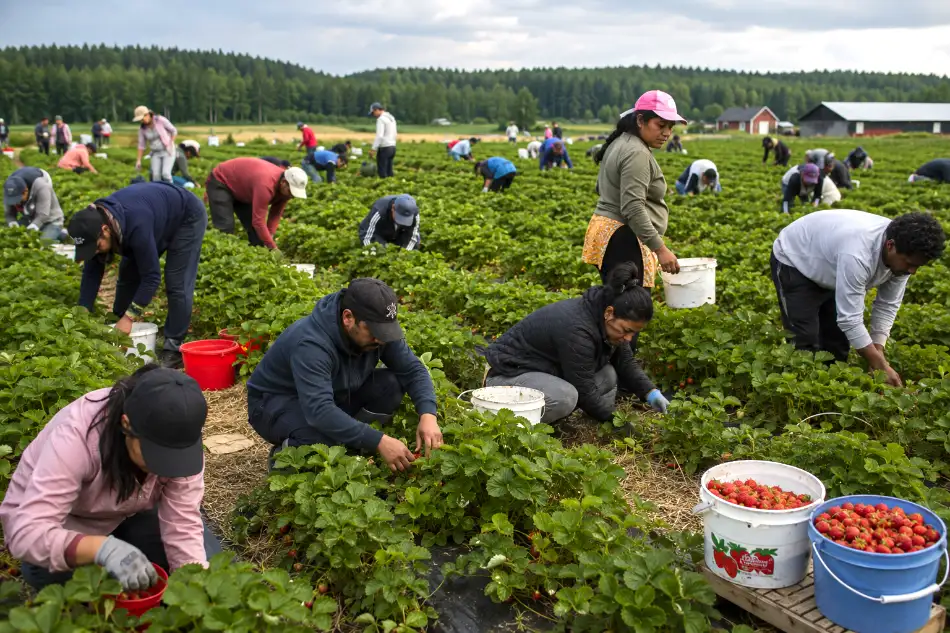
The Finnish Ministry for Foreign Affairs reports that Finland has denied approximately 1,400 seasonal work visas for foreign wild-berry pickers this year.
Authorities have processed about 1,600 of the 2,200 applications received for the 2026 harvest season.
Officials cite a high risk of labor exploitation as the primary reason for the mass rejections. They also found that many employers failed to meet their legal obligations to workers.
Recent criminal investigations into the Finnish wild-berry sector further influenced the visa decisions.
Most of the affected applications were processed at the Finnish Embassy in Bangkok, Thailand. A smaller number of applicants applied from Kazakhstan, Kenya, Vietnam, Nepal, and India.
The high rejection rate follows a major shift in Finnish labor policy. In February 2025, Finland updated the Seasonal Workers Act to strictly regulate the wild-berry industry.
This legal change required all foreign pickers to hold formal employment contracts. It also brought them under standard Finnish occupational safety regulations.
Authorities warn that not all exploitation risks are visible during the visa application process.
Previously, the industry faced repeated scandals involving poor living conditions and debt bondage among migrant workers. The new laws aim to prevent human trafficking and protect vulnerable laborers.
To evaluate this year’s visa requests, the ministry reviewed employer compliance reports from the 2025 season. Officials discovered significant shortcomings in how some companies treated their staff.
“The primary reason for refusal is that the mission processing the application is not satisfied that the employer will be able to fulfil its obligations as an employer,” said Katja Luopajärvi, Director of the Visa Unit at the Ministry for Foreign Affairs.
Luopajärvi emphasized that Finnish missions have a legal duty to act.
“Under the law, the Ministry for Foreign Affairs and Finland’s missions abroad have a duty to combat labour exploitation and trafficking in human beings whenever there is any indication of such activity,” she said.
Authorities warn that not all exploitation risks are visible during the visa application process. The government plans to monitor employers closely throughout the upcoming summer harvest.
Companies hiring foreign workers remain fully responsible for providing fair wages and appropriate accommodation.
With berry-picker visa applications being rejected at such an overwhelming rate, berry businesses are worried they will not have enough workers. They fear the berries will remain in the forest, and customers will have to pay more for the limited supply.

 Submit Form
