

The Briefing
- Jamming affects most planes in Finnish airspace
- Helsinki airport experiences frequent navigation signal interference
- Flights remain safe using traditional radar systems
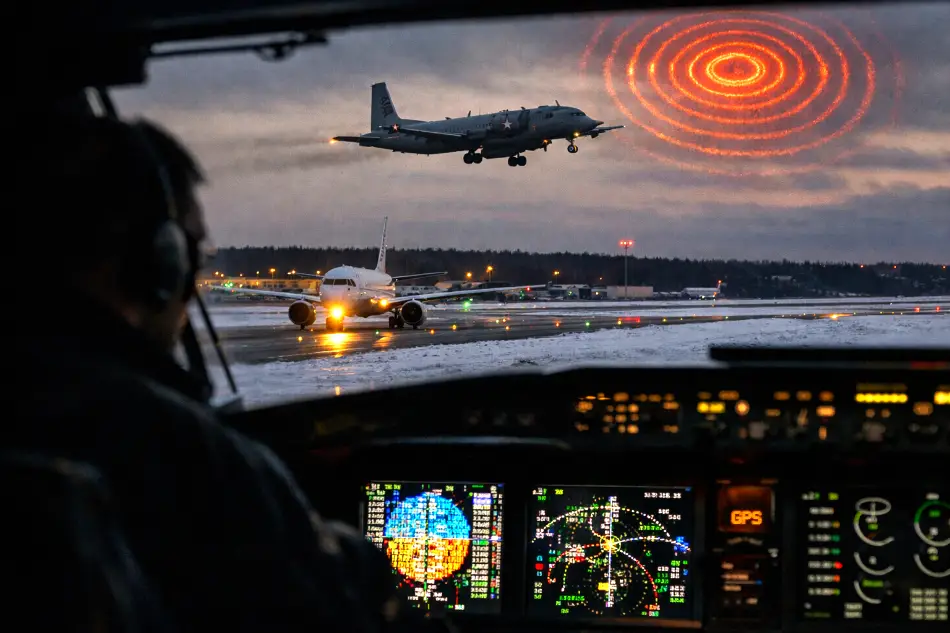
Russian electronic interference is affecting the navigation systems of nearly all aircraft flying through Finnish airspace, including those arriving at the country’s main international hub in Helsinki, according to local media reports from Yle and Helsingin Uutiset.
Despite the widespread disruption to Global Positioning System (GPS) signals, the interference has not caused any dangerous situations for commercial aviation.
Pilots and air traffic controllers are instead relying on traditional navigation methods that were standard before the year 2000.
Raine Luojus, the chief executive of Finland’s state-owned air navigation service Fintraffic, told local Finnish-language media that the jamming is strongest in southern and eastern Finland. He noted that the interference is still present across the entire country.
Helsinki Airport, which handles roughly 15 million passengers annually, experiences the same level of interference as smaller regional airports located directly on the eastern border. The disruption does not significantly impact daily operations at the capital’s busy aviation hub.
Out of the 400 to 500 flights operating at Helsinki Airport each day, air traffic controllers only need to manually guide a few individual aircraft affected by the signal loss.
When a plane loses its satellite navigation, controllers use ground-based radar to guide the aircraft until the GPS signal returns.
When a plane loses its satellite navigation, controllers use ground-based radar to guide the aircraft until the GPS signal returns.
The interference has been continuous since Russia began its full-scale invasion of Ukraine in early 2022.
The European Union Aviation Safety Agency has previously warned about increased electronic warfare affecting civilian flights in the Baltic region.
Luojus suspects the jamming is a spillover effect from Russia attempting to protect its own airspace from Ukrainian drone attacks, particularly around nearby St. Petersburg. The Russian metropolis is located less than 200 kilometers from the Finnish border, making electronic signal overlap highly likely.
These defensive measures in Russia are also directly altering international flight paths. Frequent closures of St. Petersburg’s airspace due to drone threats have forced dozens of flights traveling from Asia to Europe to reroute through Finland.
On recent nights, up to 30 aircraft primarily from Chinese airlines have been redirected over Finnish and Swedish airspace to reach their European destinations. Fintraffic treats these rerouting requests as routine procedures, comparing them to guiding planes around summer thunderstorms.

 Submit Form
