

The Briefing
- Two drones crashed in Southeast Finland on Sunday
- Air Force confirmed one Ukrainian long-range drone
- Police are investigating the crashes as general danger
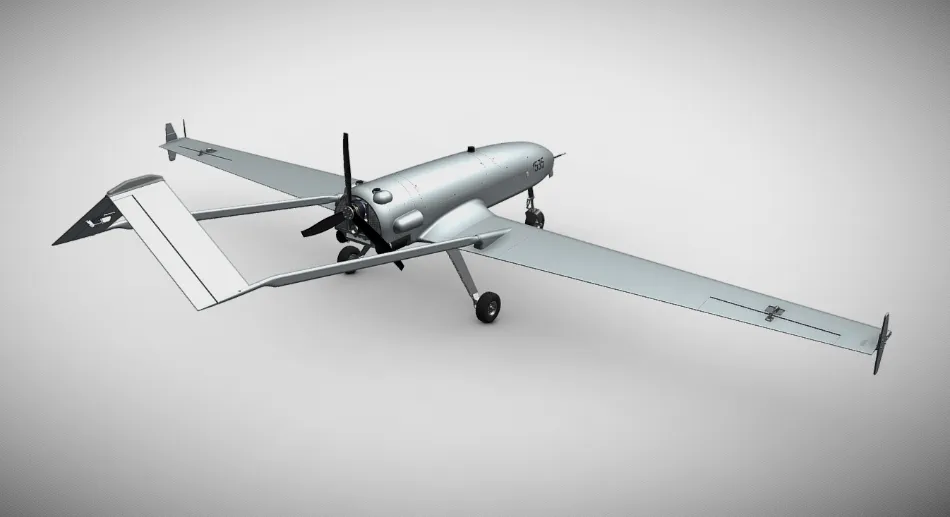
Finnish authorities are investigating a suspected territorial violation after two unmanned aerial vehicles crashed in Southeast Finland on Sunday. The Finnish Air Force confirmed that at least one of the devices was a Ukrainian-made Antonov AN-196 long-range drone, according to reports from public broadcaster Yle and other outlets.
The National Bureau of Investigation is treating the incident as an aggravated causing of general danger. Meanwhile, the Finnish Border Guard has launched an investigation into the suspected airspace violation.
The first drone was reported to police at 10:04 a.m. after it crashed north of Kouvola in the Kymenlaakso region. A second device was reported at 12:27 p.m. in Luumäki, South Karelia.
Both locations are in Southeast Finland, a region that shares a long land border with Russia.
Police have cordoned off the crash sites for further investigation and evacuated nearby residents as a precaution. Authorities noted that the areas are sparsely populated.
Finland joined the NATO military alliance in 2023 and maintains strict surveillance of its 1,340-kilometer border with Russia. Ukrainian forces frequently use long-range drones to target Russian infrastructure, which can occasionally stray off course.
Ukrainian drone strikes have fundamentally altered the geography of the war.
Prime Minister Petteri Orpo stated that all relevant authorities are actively managing the situation. The Finnish Air Force deployed an F/A-18 Hornet fighter jet for an identification mission after civilians reported seeing the drones.
During a Sunday evening press conference, Orpo said that shooting down errant drones in the future will be considered on a case-by-case basis. Defense Minister Antti Häkkänen added that the government is treating the matter very seriously.
The Gulf of Finland Coast Guard District is leading the preliminary investigation into the territorial violation. Authorities stated they will release more information as the investigation progresses.
Police have strongly urged the public not to touch any drone debris found in the region. Anyone who discovers potential drone parts should report them immediately to the police.
Ukrainian drone strikes against Russian targets
Since the beginning of the full-scale invasion in February 2022, Ukraine has transformed from a nation reliant on conventional Soviet-era weaponry into a global pioneer of drone warfare.
Faced with a massive disparity in long-range missile capabilities and air power, Kyiv has utilized unmanned aerial vehicles (UAVs) as an asymmetric tool to strike deep inside Russian territory, targeting the Kremlin’s economic engine and military logistics.
One of the most impactful components of the Ukrainian drone campaign has been the sustained targeting of Russian oil refineries and energy infrastructure. By early 2024, Ukraine began launching waves of long-range kamikaze drones at facilities deep within Russia, some over 1,000 kilometers from the border.
The goal is twofold: to starve the Russian military of fuel and to slash the export revenues that fund the Kremlin’s war chest. Strikes on major refineries like those in Ryazan, Nizhny Novgorod, and the Leningrad region have at times disrupted significant percentages of Russia’s oil refining capacity.
These attacks are particularly effective because the high-tech distillation columns used in refineries are difficult to replace due to international sanctions on Western technology.
Ukraine has also prioritized Russian military infrastructure to blunt the effectiveness of the Russian Air Force. Drones have repeatedly targeted airbases such as Engels-2, Dyagilevo, and Morozovsk.
These strikes aim to destroy or damage strategic bombers and fighter jets, such as the Tu-95 and Su-34, which are used to launch cruise missiles and glide bombs at Ukrainian cities.
Beyond airfields, drones have struck ammunition depots and logistical hubs. In late 2024, massive explosions at depots in the Tver and Krasnodar regions demonstrated the ability of Ukrainian drones to bypass air defenses and ignite thousands of tons of North Korean and Russian-made ordnance, creating seismic events visible from space.
Perhaps the most revolutionary use of drones has occurred at sea. Ukraine, a country without a functional conventional navy, has effectively neutralized the Russian Black Sea Fleet using Magura V5 and Sea Baby maritime drones. These remotely piloted “suicide boats” have sunk or severely damaged numerous Russian warships, including the landing ship Caesar Kunikov and the missile corvette Ivanovets.
These strikes forced the Russian fleet to retreat from its historic base in Sevastopol to safer ports further east, effectively reopening grain corridors vital to the Ukrainian economy.
Technological innovation and domestic production
The success of these strikes is rooted in a massive domestic production drive. Ukraine has moved away from a total reliance on the Turkish-made Bayraktar TB2, which was effective early in the war but became vulnerable to Russian air defenses.
Today, Ukraine produces dozens of different drone models, including the Lyutyi, which carries a heavy payload over long distances, and the Palianytsia, a “drone-missile” powered by a jet engine for higher speeds.
Artificial intelligence is also playing an increasing role. To counter Russian electronic warfare (EW) that jams GPS signals, newer Ukrainian drones use machine vision to recognize terrain and lock onto targets autonomously during the final phase of flight, making them nearly impossible to stop with traditional jamming.
Beyond the physical damage, drone strikes serve a psychological purpose. By bringing the war to cities like Moscow and targeting the “Moscow City” business district, Ukraine aims to puncture the sense of security within the Russian heartland.
Ukrainian drone strikes have fundamentally altered the geography of the war. They have allowed Kyiv to project power far beyond its borders, hitting the Russian economy where it hurts most and forcing the Russian military to redeploy expensive air defense systems away from the front lines to protect domestic infrastructure.
As technology continues to advance, the “war of the drones” remains Ukraine’s most potent tool for leveling the playing field against a numerically superior adversary.
This time, however, one side effect was that Ukrainian drones landed in unintended territory. They landed in Finland, which is one of Ukraine’s closest allies.

 Submit Form
