

The Briefing
- Vantaa and Tampere ban face coverings
- Policies prioritize safety and open interaction
- Debate highlights cultural and educational tensions
In the halls of a typical Finnish comprehensive school, the removal of outdoor gear—heavy coats, snow boots, and thick winter beanies—is a standard morning ritual. But a new directive in some of Finland’s largest cities is taking the concept of an open classroom a step further.
Over the course of a single week in March 2026, educational authorities in both Vantaa and Tampere announced strict new policies prohibiting students from wearing anything that obscures their faces during the school day.
Turku is another major city that has banned face coverings.
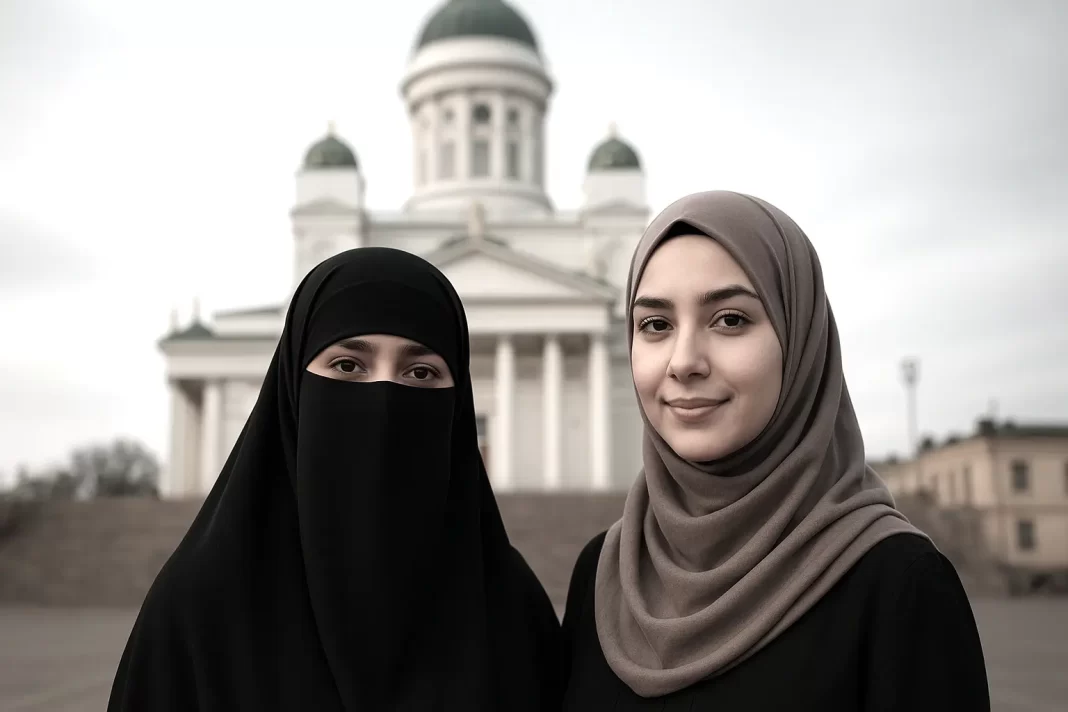
The bans, which cover items ranging from balaclavas and ski masks to religious garments like niqabs and burqas, represent a proactive shift in Finnish municipal policy.
While city officials champion the rules as essential for security and social development, the mandates have ignited a broader public conversation about integration, women’s rights, and the limits of institutional authority in a diversifying society.
Face coverings are not only a practical issue, but a major political issue in Finland.
Leaders of the Finns Party, in particular, have called for a total ban on burqas, niqabs, and even headscarves. They propose that this ban should apply not only in schools but in all public places. Finns Party Chair Riikka Purra has always been a vocal critic of the practice.
Last August, Finland’s Minister of Social Security, Sanni Grahn-Laasonen, spoke out on social media against wearing burkas and niqabs in schools.
The Catalyst: Vantaa’s Directive
The wave of localized bans began in the Helsinki metropolitan area, though not in Helsinki itself. On March 9, 2026, the City of Vantaa officially notified guardians that all pupils in comprehensive schools must remain identifiable throughout the school day.
According to the city’s administrative guidelines, the rule forbids any attire that prevents facial recognition—specifically naming hoods, scarves, masquerade masks, and religious face veils.
Vantaa’s educational leadership justified the decision on the grounds of both physical and psychological safety. “Sanattomalla viestinnällä” (non-verbal communication), such as eye contact and micro-expressions, was highlighted as a critical component of healthy social interaction and community trust.
While Vantaa authorities acknowledged that incidents of students coming to school with obscured faces have been “very rare,” they maintained that having a clear, uniform policy was necessary to prevent future ambiguities.
Tampere Follows Suit
Exactly one week later, on March 16, the City of Tampere announced it had drafted its own set of comprehensive guidelines.
As reported by Daily Finland, Tampere’s restrictions are notably broad, extending beyond basic education to include early childhood education (daycares), upper secondary schools, and vocational institutes.
The regulations are scheduled to take effect in the autumn of 2026.
Anne-Mari Jussila, Tampere’s Deputy Mayor of educational services, defended the ban by inextricably linking facial visibility to the core mission of education.
“The recognition of students and staff and open interaction are safety issues,” Jussila stated. “Facial visibility helps the development of language, emotional expression and social skills, teacher-student interaction and the reliability of assessment at all levels of education.”
Tampere’s Chief of Basic Education, Ulla Ojalammi, confirmed that the city had not previously required such rules but was moved to act “due to the national debate and the policies of other large cities,” aiming to guarantee an equal and safe learning environment for all students.
Face coverings are not only a practical issue, but a major political issue in Finland.
The Political and Cultural Divide
While educational administrators have carefully framed these policies around pedagogical effectiveness and general campus security, the political discourse surrounding the bans reveals deeper ideological fault lines.
On March 10, just a day after Vantaa’s announcement, the Tampere chapter of the National Coalition Party Youth (Kokoomusnuoret) published a forceful statement advocating for a “burqa ban” in local schools.
Eemi Kinnunen, the organization’s chair, argued that the ban was a necessary defense of Western values and gender equality.
“A burqa ban in Tampere’s comprehensive schools would be a positive and necessary step, sending a clear message that a culture that subjugates women and girls is not acceptable in Finnish society,” Kinnunen argued.
However, the necessity of such sweeping bans is not universally accepted across Finland’s municipalities. According to a report by Finland Today, the national landscape remains highly fragmented.
While cities like Vantaa, Tampere, and Turku have restricted face coverings, Helsinki—Finland’s largest city—has opted against establishing official guidelines, preferring to resolve rare conflicts on a case-by-case basis.
Espoo and Oulu have similarly reported minimal use of face-covering accessories and see no immediate need for prohibition.
Crucially, the Finnish Ministry of Education has moderated the urgency of the debate, stating that the use of face coverings in classrooms is neither widespread nor a significant source of disruption on a national scale.
Finland’s Muslim community has frequently expressed disappointment regarding the debate over burka bans, blaming populist rhetoric for the tension.
Last year, a joint statement from 40 organizations representing the community sharply criticized discussions about banning face coverings or headscarves in public places, such as schools.
“In our view, this discussion represents classic populism, an attempt to fish for far-right votes by creating an artificial problem out of a non-existent phenomenon,” the statement said.

 Submit Form
